

Why Truck Accidents Increase During Pennsylvania’s Busy Fall Season
As summer transitions into fall, Pennsylvania highways become increasingly crowded with commercial vehicles, delivery trucks, freight carriers, school traffic, and seasonal travelers. September marks the beginning of one of the busiest transportation periods of the year as businesses ramp up shipping operations, retailers prepare for holiday demand, and commuters return to regular routines after summer vacations. At the same time, changing weather conditions bring rain, fog, earlier sunsets, and slick roadways that make driving more dangerous for both passenger vehicles and large commercial trucks. Unfortunately, these combined factors contribute to a noticeable increase in serious truck accidents across Pennsylvania every fall.
According to the Federal Motor Carrier Safety Administration (FMCSA), large truck crashes continue to cause thousands of severe injuries and fatalities nationwide each year, with congested highways and poor weather conditions significantly increasing collision risks. In Pennsylvania, heavily traveled routes such as Interstate 76, I-79, I-80, I-376, and the Pennsylvania Turnpike frequently experience dangerous trucking accidents involving tractor-trailers, delivery vans, box trucks, and commercial freight vehicles during the fall season.
Frischman & Rizza helps injured accident victims understand their legal rights after serious Pennsylvania truck accidents and pursue compensation for medical bills, lost income, and long-term injuries caused by negligent trucking companies and drivers. Understanding why truck accidents increase during Pennsylvania’s busy fall season can help drivers stay safer while also protecting their rights after devastating collisions.
Increased Commercial Traffic Creates More Accident Risks
Fall is one of the busiest commercial transportation seasons in Pennsylvania. As retailers prepare for holiday shopping demand and businesses increase freight shipments, highways experience substantially higher volumes of commercial truck traffic. Delivery services, warehouse operations, construction suppliers, food distributors, and manufacturing companies all rely heavily on trucking during September and the months leading into winter.
Several factors contribute to increased commercial truck traffic during the fall:
- Retailers preparing for holiday inventory demand
- Increased delivery truck activity in residential areas
- School-related commuter congestion
- Construction projects continuing before winter weather
- Agricultural and seasonal freight transportation
- More drivers returning from summer vacations
- Earlier sunsets reducing visibility during rush hour
According to the American Trucking Associations (ATA), trucks transport the majority of freight across the United States, making commercial trucking essential to supply chains and consumer deliveries. However, increased truck volume also increases the likelihood of serious accidents involving passenger vehicles sharing crowded roadways with much larger commercial vehicles.
Truck accidents are often more severe than standard car crashes because of the enormous size and weight differences involved. Fully loaded tractor-trailers may weigh up to 80,000 pounds, requiring substantially longer stopping distances and creating greater impact force during collisions. Passenger vehicle occupants frequently suffer catastrophic injuries in crashes involving large commercial trucks.
Common causes of Pennsylvania truck accidents during fall include:
- Driver fatigue from long delivery schedules
- Distracted driving
- Speeding in wet road conditions
- Improper lane changes
- Mechanical failures or poor maintenance
- Cargo shifting or overloaded trailers
- Aggressive driving in congested traffic
- Failure to adjust speed during rain or fog
Delivery truck accidents also increase during fall as companies rush to meet shipping demands. Drivers operating under tight deadlines may speed through neighborhoods, make unsafe turns, or drive while distracted by GPS systems and delivery schedules. Residential areas near schools, shopping centers, and business districts often experience elevated accident risks involving smaller commercial vehicles and delivery vans.
Pennsylvania’s mountainous terrain, narrow roads, tunnels, and construction zones further complicate commercial driving conditions throughout the state. Truck drivers unfamiliar with local roadways may struggle to navigate steep grades, sharp curves, and congested urban traffic areas near Pittsburgh and Philadelphia.
Rainy Weather and Reduced Visibility Increase Truck Crashes
Fall weather patterns play a major role in Pennsylvania truck accidents. September and October often bring heavy rainstorms, wet pavement, fog, and rapidly changing visibility conditions that create dangerous driving environments for large commercial vehicles. Slick roads significantly reduce tire traction and increase stopping distances, especially for fully loaded trucks carrying heavy cargo.
Rain-related hazards that contribute to truck accidents include:
- Hydroplaning on wet highways
- Reduced braking effectiveness
- Poor visibility during storms
- Tire blowouts caused by slick roads
- Jackknife accidents involving trailers
- Multi-vehicle chain-reaction collisions
- Loss of control on curves or downhill grades
According to the National Highway Traffic Safety Administration (NHTSA), wet pavement contributes to thousands of serious crashes every year nationwide. Commercial trucks become especially dangerous during rainy weather because their larger size and heavier weight make sudden stopping or maneuvering far more difficult than passenger vehicles.
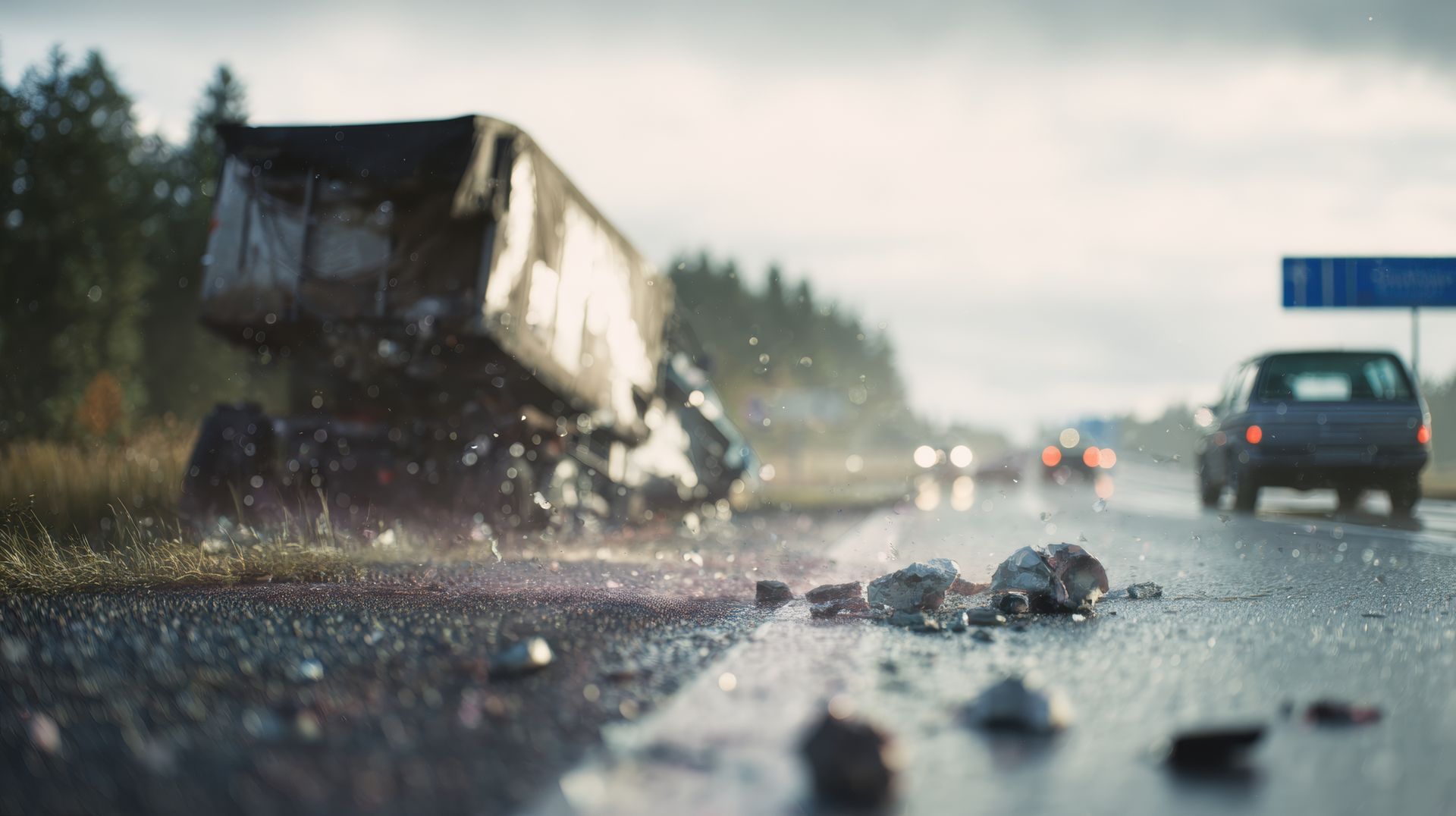
Jackknife accidents are particularly common during rainy fall conditions. These crashes occur when a trailer swings outward from the cab, often blocking multiple lanes of traffic and triggering chain-reaction collisions involving surrounding vehicles. Sudden braking, speeding, and slippery roads frequently contribute to jackknife incidents on Pennsylvania highways.
Fog and reduced daylight hours also increase truck accident risks during fall months. Morning fog can severely limit visibility on highways and rural roads, while earlier sunsets create darker commuting conditions during evening rush hours. Truck drivers operating for extended hours may experience fatigue and delayed reaction times when combined with poor visibility.
Important safety concerns involving trucks during rainy weather include:
- Trucks requiring longer stopping distances
- Limited visibility around large vehicles
- Tire spray reducing surrounding driver visibility
- Blind spots increasing during heavy rain
- Increased rollover risks on curves or ramps
Passenger vehicle drivers also contribute to truck accidents when they follow trucks too closely, drive aggressively near blind spots, or underestimate the stopping limitations of commercial vehicles. Pennsylvania highways often become especially hazardous during the first major fall rainstorms because accumulated oil and debris create slippery pavement conditions.
Because weather-related truck accidents frequently involve multiple vehicles and disputed liability issues, determining fault can become complicated quickly. Trucking companies and insurers often conduct immediate investigations aimed at minimizing financial exposure after serious crashes.
Truck Accident Liability Can Involve Multiple Parties
Truck accident cases are often far more complex than ordinary passenger vehicle collisions because several parties may potentially share responsibility. In addition to the truck driver, liability may extend to trucking companies, maintenance providers, cargo loaders, vehicle manufacturers, or third-party contractors depending on the circumstances surrounding the crash. This is one of the key reasons truck accident claims are more complex than car accidents.
Potentially liable parties in Pennsylvania truck accident claims may include:
- Commercial truck drivers
- Trucking companies and employers
- Delivery companies
- Vehicle maintenance contractors
- Cargo loading companies
- Truck or parts manufacturers
Truck drivers have legal duties to operate vehicles safely and comply with both Pennsylvania traffic laws and federal trucking regulations. Violations involving speeding, distracted driving, fatigue, impaired driving, or unsafe lane changes may establish negligence after serious accidents.
The FMCSA also regulates commercial trucking operations through rules involving:
- Hours-of-service driving limits
- Vehicle inspection requirements
- Driver training and licensing standards
- Cargo securement procedures
- Drug and alcohol testing requirements
Trucking companies may face liability if they pressured drivers to exceed legal driving limits, failed to maintain vehicles properly, hired unqualified drivers, or ignored safety violations. In some cases, black box data, driver logs, GPS records, maintenance reports, and electronic communication records become critical evidence for proving negligence.
Delivery truck accident claims may involve additional complications when drivers work for subcontractors or third-party delivery services. Determining which company controlled the driver or vehicle at the time of the crash often requires detailed investigation.
Common evidence used in Pennsylvania truck accident cases includes:
- Electronic logging device (ELD) records
- Black box vehicle data
- Maintenance and inspection reports
- Driver qualification files
- Surveillance or dashcam footage
- Accident reconstruction analysis
- Toxicology reports if impairment is suspected
Pennsylvania follows comparative negligence laws, meaning insurance companies may attempt to shift partial blame onto injured victims to reduce payouts. For example, insurers may argue that passenger vehicle drivers changed lanes improperly, followed trucks too closely, or failed to react appropriately during poor weather conditions.
Because truck accidents frequently involve catastrophic injuries, insurers aggressively defend these claims to limit financial exposure. Victims often face severe injuries such as traumatic brain injuries, spinal cord damage, internal bleeding, orthopedic trauma, and permanent disabilities requiring lifelong medical care.
Protecting Your Rights After a Pennsylvania Truck Accident
The aftermath of a serious truck accident can be overwhelming physically, emotionally, and financially. Victims often face emergency medical treatment, surgeries, rehabilitation, lost income, emotional trauma, and uncertainty about future recovery. Taking immediate action after a truck accident can help preserve evidence and strengthen compensation claims.
Important steps after a Pennsylvania truck accident include:
- Seek immediate medical attention
- Call law enforcement and obtain a crash report
- Photograph vehicle damage and roadway conditions
- Preserve witness contact information
- Avoid speaking with trucking company insurers alone
- Follow all medical treatment recommendations
- Contact a Pennsylvania truck accident lawyer promptly
Trucking companies and insurers often deploy investigators immediately after serious crashes to gather evidence and protect their legal interests. Critical evidence such as electronic driving logs, maintenance records, surveillance footage, and vehicle inspection reports may disappear quickly if not preserved early.
Pennsylvania law allows truck accident victims to pursue compensation for:
- Emergency medical expenses
- Hospitalization and surgery costs
- Rehabilitation and therapy
- Lost wages and reduced earning capacity
- Pain and suffering damages
- Emotional distress compensation
- Future medical treatment needs
- Wrongful death damages in fatal accidents
Catastrophic injury cases may also require testimony from medical specialists, accident reconstruction experts, vocational economists, and life-care planners to establish long-term financial damages accurately. Understanding how to maximize compensation after a trucking accident often depends on the strength of this evidence.
Frischman & Rizza assists Pennsylvania truck accident victims by investigating crashes thoroughly, preserving evidence, negotiating with insurance companies, and pursuing compensation designed to support long-term recovery and financial stability. While no legal claim can undo the trauma caused by a devastating truck accident, holding negligent parties accountable may help victims secure the resources needed to rebuild their lives after serious injuries.
Frequently Asked Questions
Why do truck accidents increase during Pennsylvania’s fall season?
Commercial traffic increases significantly during fall due to shipping demand, delivery services, school traffic, and seasonal travel, combined with rainy weather and reduced visibility.
What causes most Pennsylvania truck accidents?
Common causes include driver fatigue, distracted driving, speeding, poor truck maintenance, overloaded cargo, wet road conditions, and aggressive driving behaviors.
Who can be liable after a truck accident?
Liability may involve truck drivers, trucking companies, delivery services, maintenance contractors, cargo loaders, or vehicle manufacturers.
What injuries are common in truck accidents?
Truck accidents often cause traumatic brain injuries, spinal cord injuries, fractures, internal bleeding, emotional trauma, and permanent disabilities.
Should I contact a lawyer after a Pennsylvania truck accident?
Yes. Truck accident cases are often complex and involve multiple parties, federal regulations, and aggressive insurance investigations.
If you or a loved one was injured in a Pennsylvania truck accident during the busy fall season,
Frischman & Rizza can help you understand your legal rights and pursue compensation for medical expenses, lost income, and long-term injuries. Early legal action can make a major difference in preserving evidence and protecting your financial future after a serious commercial vehicle crash.